The Budget has been dismissed as “scattergun” by an economic think tank formerly run by one of the chancellor John Healey's own Treasury ministers.
The Resolution Foundation, set up to help people on lower and middle incomes, says the Budget will do little to address “the sharp challenges facing Britain”.
And it warned that the decisions facing the government would “unavoidably get starker” next year because of the failure to tackle them now.
The rebuff for Mr Healey's package of measures is particularly embarrassing because until two years ago the think tank was headed by pensions minister Torsten Bell.
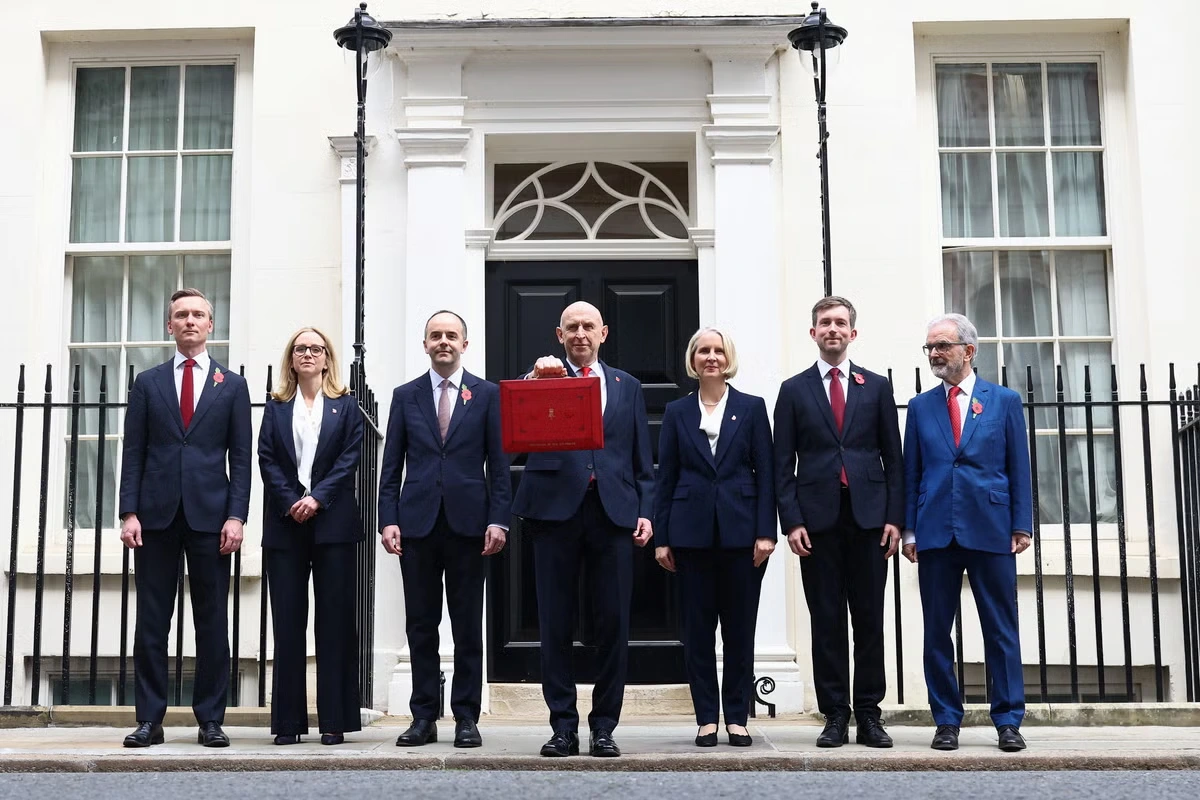
Mr Bell was one of six Treasury ministers who appeared alongside Mr Healey in Downing Street yesterday for the traditional photograph of the Chancellor holding the Red Box containing the Budget before heading to the Commons to unveil its contents.
Mr Bell played a key role in drawing up the measures. Until he became an MP in 2024 he was chief executive of the Resolution Foundation.
In its highly critical verdict on the Budget today, the think tank said the cost of living measures announced yesterday would not stop energy bills from leaping above levels seen during the last rises triggered by the Iran War and Middle East crisis.
Mr Bell's successor as Resolution Foundation, chief executive Ruth Curtice, said: “Cost of living support is being spread far too thinly and will leave even those families receiving help facing higher energy bills than they did during the last energy price shock.”
The think tank said that average annual energy bills are likely to rise to £1,750 as a result of government aid in 2026-27.
It also stated that typical disposable income can be expected to go down by £1,050 in the next two to three years when the next general election is due to take place.
Ms Curtice added: “A more dramatic change of tactics may be needed, and we did not learn how the government will choose between public service ambitions and household incomes. Next year the choices will unavoidably get starker.”
She added that the Budget “did not live up to the scale of the challenges that Britain faces”, arguing that “in the face of what are really catastrophic forecasts for living standards” the government had taken “an approach to cost of living support that may be popular but is far from effective.”
Meanwhile, Greg Thwaites, interim chief economist at the think tank warned that the government’s move to provide £100 energy support for households in council tax band A to D is “extremely badly targeted”.
“£100 is nice, but the point is it’s extremely badly targeted … There are lots of people who are doing okay who probably can manage without that money”, he said.
He added that the support has “really nothing to do with how much energy people use” leaving lower income households which have high levels of energy consumption with the similar support to higher income households with smaller gas and electricity use.
Until he became a minister Mr Bell was best known as the brains behind one of the most derided stunts in modern political history.
As an aide to former Labour leader Ed Miliband he was credited with devising the notorious 'Edstone,' whereby Labour's six core 2015 election pledges would be carved into a massive 8 foot 6 inches tall limestone slab to be erected in Downing Street.
As pensions minister since 2024 Mr Bell was heavily involved in Andy Burnham’s controversial decision to end the pensions ‘triple lock.’
It comes as the budget watchdog, the Office of Budget Responsibility, said the UK’s “economic and fiscal position remains very challenging” after almost two decades of shocks and stagnation, pushing up the national debt.
Professor David Miles of its Budget Responsibility Committee (BRC) warned it marked a “pretty grim picture”.
“If you go back to just before Covid and take that as your base, where we are right now which is what some seven years later, is virtually no growth in per person real household disposable income,” he said.
“That’s pretty unusual in the history of the UK.” He added: “It’s been a dismal period in British economic history.”